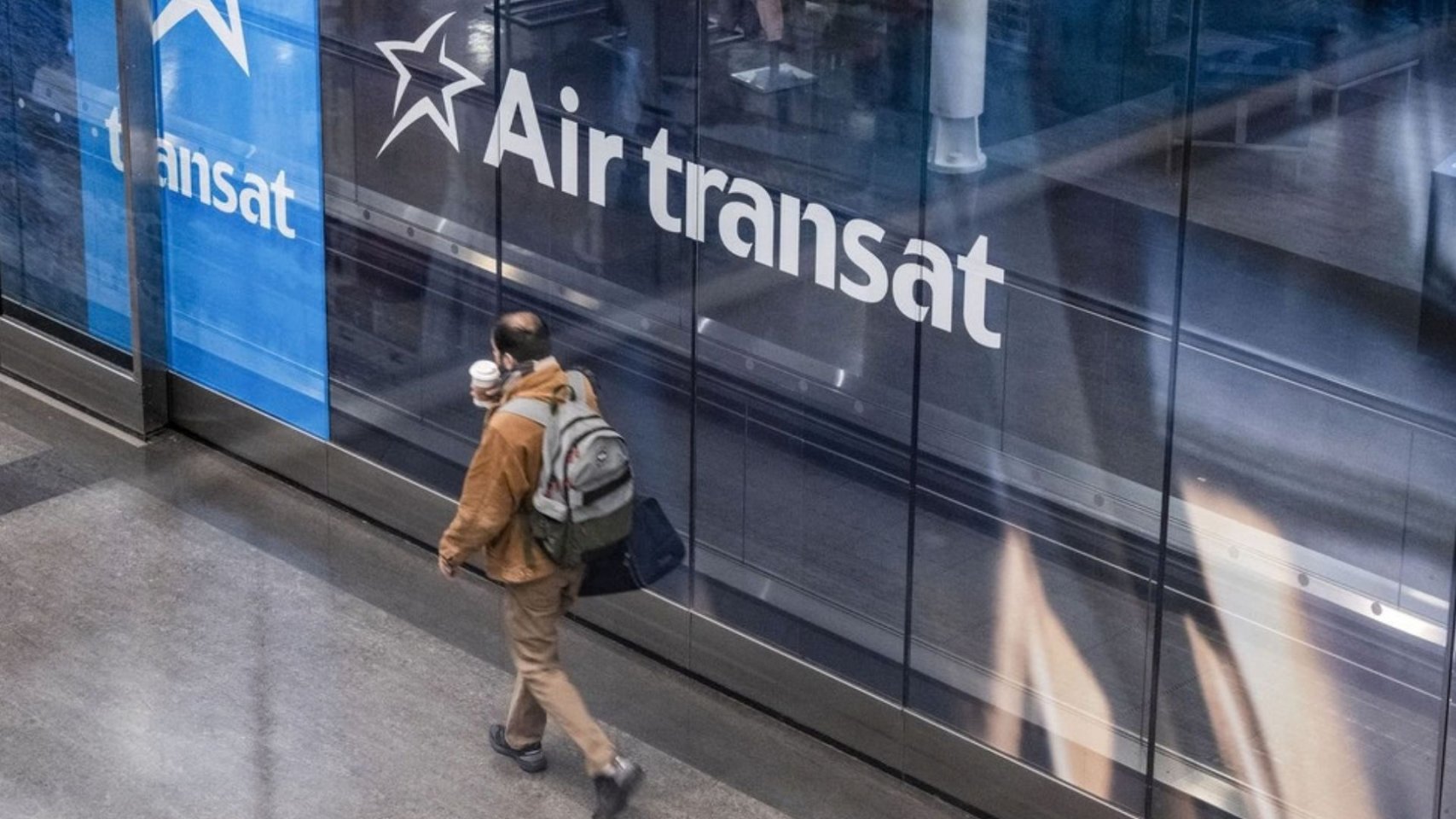
Canadian airline Air Transat has avoided a structural insolvency crisis after once again seeking financial assistance from the Canadian federal government, which secured a $250 million injection through the Canada Enterprise Emergency Funding Corporation. This state rescue fund, supplemented by an additional $80 million for its subsidiary Flair Airlines, aims to safeguard the liquidity of the country's major airlines in the face of severe strain on their operating accounts.
Despite this liquidity restructuring, the company is maintaining its strategic plan for the 2026-2027 winter season, guaranteeing the launch of the first regular, direct air connection between Canada and Gran Canaria in the last fifty years. The service will link Gran Canaria Airport with Montreal and Toronto airports via two weekly flights operated with high-efficiency Airbus A321neo aircraft, opening a stable transatlantic route to the North American market for the island's tourism sector.
Air Transat's precarious financial situation stems from a double pressure on its bottom line. On the one hand, the inflationary surge in operating costs related to fuel supplies has driven the company's expenses up by approximately US$128 million. On the other hand, the structural deterioration of one of its traditional long-haul routes—the tourist routes between Canada and Cuba—has led to a collapse in demand due to the loss of competitiveness of the Caribbean destination.
The suspension of these flights to the Caribbean island resulted in a direct loss of 116 million Canadian dollars in first-half revenue for Air Transat (equivalent to approximately 85 million US dollars). The simultaneous cash flow squeeze and mounting costs forced management to request extraordinary public assistance after exhausting the 140 million Canadian dollars previously granted by Ottawa.
Despite its financial recovery, the airline is maintaining its strategic roadmap to diversify its international destination network for the 2026-2027 winter season, marking a historic milestone for the island's tourism sector. Gran Canaria will have, for the first time, direct and regular air connections with North America, establishing the first stable transoceanic service to the American continent in the last half-century.
The new schedule establishes two weekly flights operated by high-efficiency, long-range Airbus A321neo aircraft, with a capacity of approximately 200 seats in a double-class configuration. The flights will connect Gran Canaria Airport (LPA) with Montreal-Trudeau International Airport (YUL) and Toronto International Airport, with scheduled departures from Canada on Saturdays (Montreal) and Sundays (Toronto), opening a direct channel to a high-value source market for the archipelago's accommodation sector.