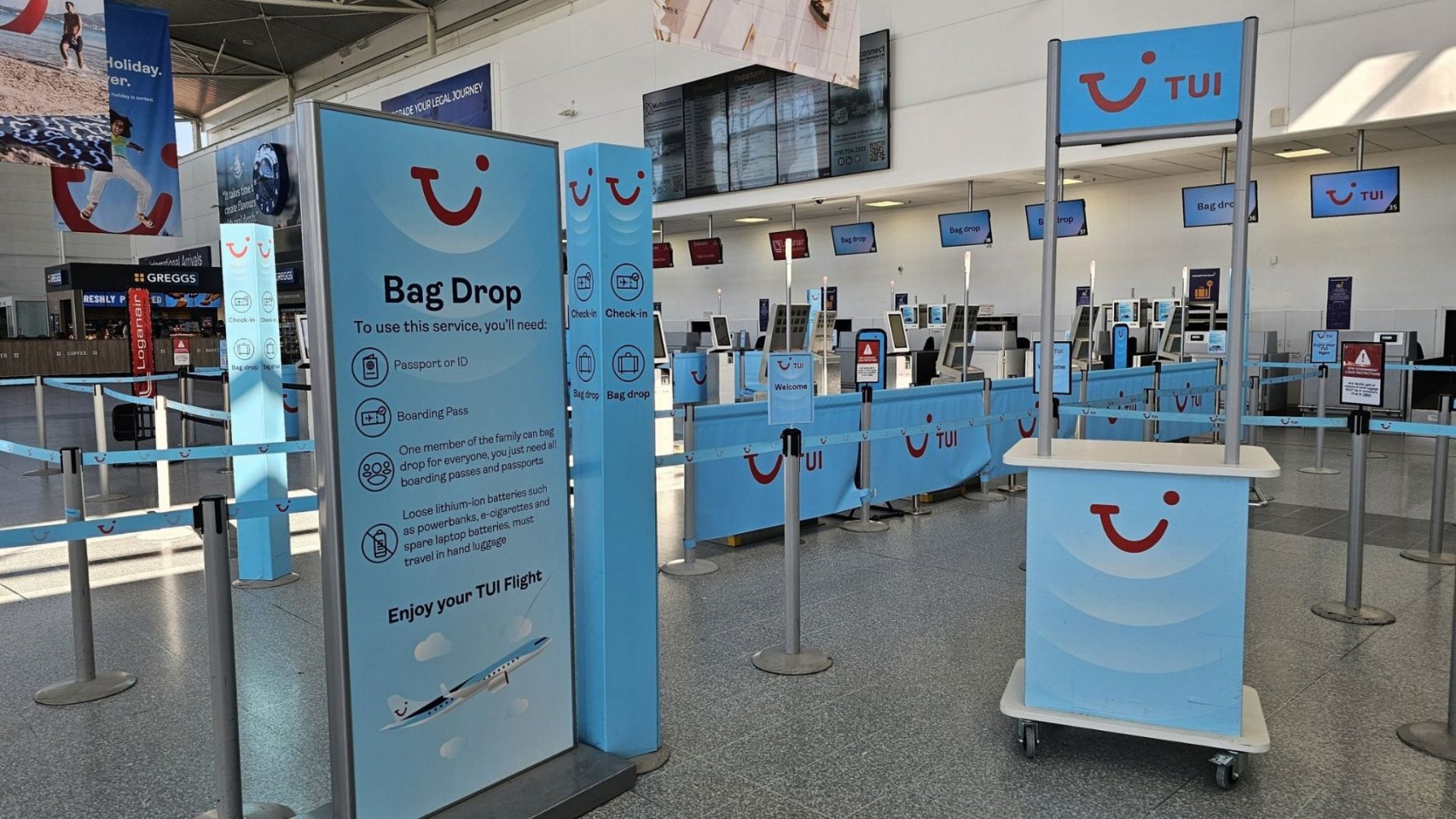
German tour operator TUI has ranked the Canary Islands and Spain among the top destinations for European travelers this winter season, a commercial boost that contrasts sharply with the 5% drop in revenue from summer bookings due to geopolitical instability stemming from the conflict in Iran. According to data released by the company from Frankfurt, demand for short- and medium-haul destinations, coupled with the persistence of last-minute bookings, is supporting the tour operator's outlook. TUI expects to close its 2026 fiscal year with an operating profit before exceptional items of between €1.200 billion and €1.300 billion, down from the €1.410 billion achieved in the previous year.
Despite this summer contraction, which resulted in an occupancy rate 2% lower than the previous year, demand for the winter season shows solid dynamism, driven by short- and medium-haul destinations and the consolidation of last-minute bookings. In this context, the German tour operator highlighted that Spain—particularly the Canary and Balearic archipelagos—and Greece are leading the European market's preferences. Looking ahead to the end of the year, TUI anticipates that the Canary Islands, the Iberian Peninsula, Egypt, and Cape Verde will lead winter tourist flows, while Thailand, Mexico, and the Dominican Republic stand out in the long-haul segment.
On the financial and corporate front, TUI has adjusted its forecasts for the 2026 fiscal year—which ends in late September—estimating operating profit before exceptional items to be between €1.200 billion and €1.300 billion. This narrows the previous range of €1.100 billion to €1.400 billion, compared to the €1.410 billion achieved in the previous fiscal year. The multinational, which reached a turnover of nearly €24.200 billion in the last cycle, is counting on the strength of its main summer and winter markets to stabilize its operating margins in the face of macroeconomic and international geopolitical volatility.
This winter planning scenario coincides with the publication of statistics from the National Statistics Institute (INE) for August, which confirm a continued rise in hotel prices in Spain. Rates in the sector increased by 6,3% year-on-year—the largest increase since April of last year—marking 62 consecutive months of growth and bringing the average daily rate to €166,90. Specifically in the Canary Islands, hotel prices registered a year-on-year increase of 6,08%, reflecting the archipelago's strong profitability.
The 596 hotels open in the islands recorded 1,1 million travelers in August—336.433 of whom were Spanish residents and the remainder international visitors—generating 7,2 million overnight stays with an average stay of 6,49 days. With 269.276 beds available, the average occupancy rate in the archipelago reached 82,01%, rising to 85,22% when calculated by room occupancy, and employing 63.764 workers.
Nationwide, the hotel sector closed August with a 1,4% increase in overnight stays, reaching 48,7 million, consolidating a positive summer following the 0,3% growth recorded in July. Average revenue per occupied room climbed 7,3% to €166,9, while average revenue per available room (RevPAR) stood at €133,1, compared to €124,4 the previous year.
The performance of international source markets maintained the United Kingdom as the main driver of foreign tourism to Spain, accounting for 25,5% of hotel overnight stays in August (one in four foreign tourists), followed by the German market with 14,5%, France with 11,1%, Italy with 6,2%, and the Netherlands with 4,8%. Meanwhile, travelers residing in Spain primarily chose Andalusia, which captured 24,4% of domestic stays, followed by Catalonia (14,9%) and the Valencian Community (12,8%), while the Balearic Islands led in receiving non-residents with 33% of overnight stays, ahead of Catalonia (20,6%) and the Canary Islands (18,2%).