The mapping of inter-island transport in the Canary archipelago has historically been dominated by the northern hub and mandatory travel between the capital cities. As Maspalomas24H reported, despite the skepticism of Mogán's mayor, Onalia Bueno, now with the People's Party (PP), the draft of the new Canary Islands Sustainable and Smart Mobility Strategy (EMSICAN) introduces a radical shift in maritime transport planning by proposing a direct route connecting the coastal towns of Arguineguín, in Gran Canaria, and Los Cristianos, in Tenerife, Atlántico Hoy reported. This connection aims to link the two major tourist and population centers in the south of both islands by sea, freeing users from the long road journeys that currently hinder access to the traditional ports.
Currently, maritime traffic of vehicles and passengers between the two largest islands is primarily channeled through corridors such as the one linking Agaete with Santa Cruz de Tenerife. Any traveler or cargo originating in southern Gran Canaria—from Mogán to Maspalomas—and destined for southern Tenerife—such as Adeje or Arona—is forced to make two land journeys before and after boarding. The alternative designed by the regional strategy aims precisely to eliminate this inefficient detour, reducing transit times and establishing a commercial and passenger route that is competitive with conventional transport.
The strategic document identifies the port of Arguineguín as the ideal infrastructure to centralize departures on the island, relying on a dock that already handles regular passenger traffic with local enclaves such as Anfi del Mar, Puerto Rico and Mogán, with a berthing line of 398 meters and an average draft of 5 meters.
However, the conceptual leap towards a high-capacity inter-island ferry service raises significant operational questions. The government draft avoids specifying the ideal vessel type, the frequency schedule, the estimated journey time, or the necessary port adaptation works, relegating the initiative to a possibility subject to future feasibility studies without an implementation timeline.
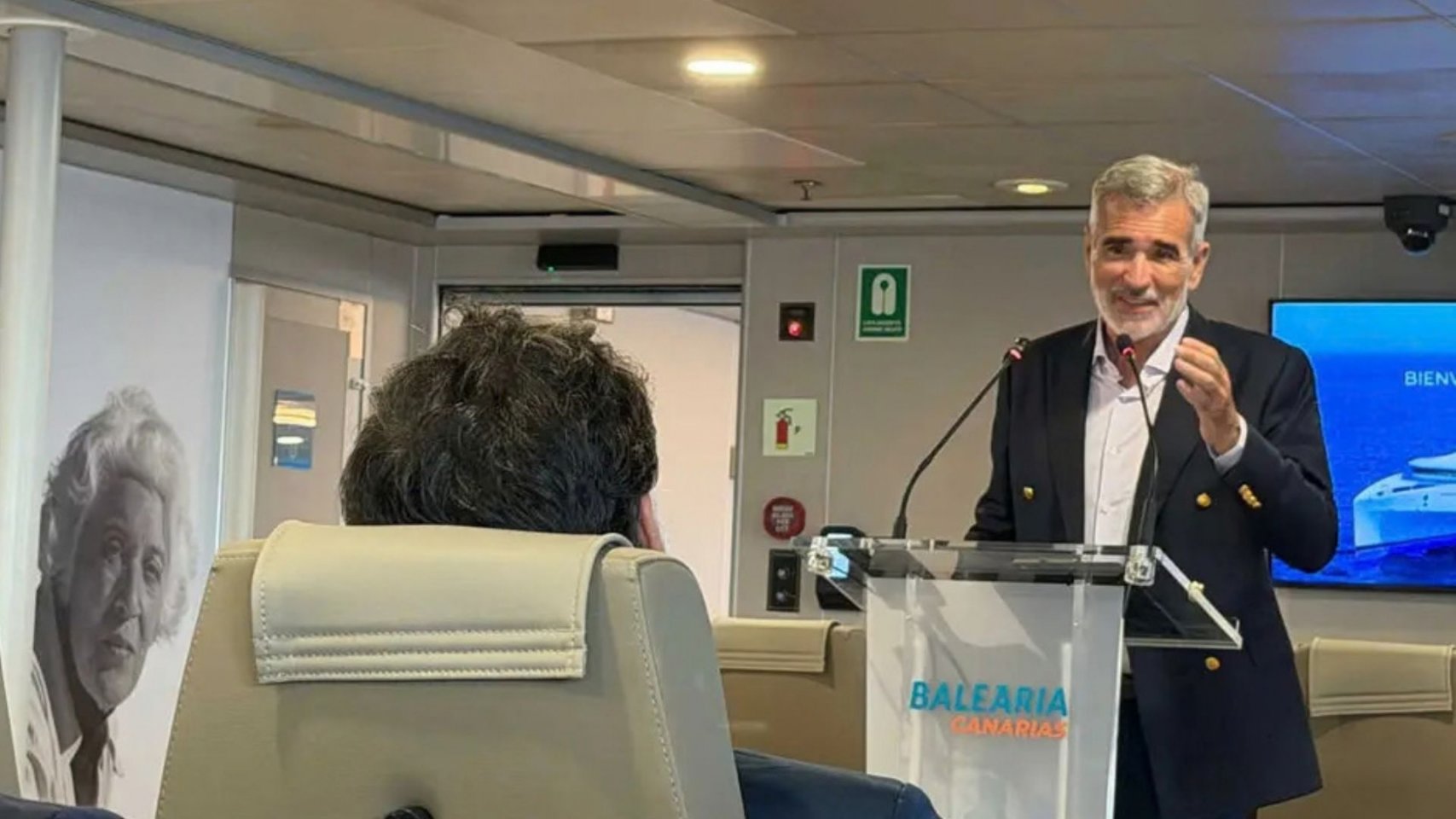
The idea of connecting southern Gran Canaria with Tenerife is not entirely new in the debate on infrastructure in the Canary Islands. Back in May 2025, major operators such as Naviera Armas, now Baleària, raised the feasibility of operating a high-speed rail route between the two islands to meet the demand from tourists and residents. The inclusion of this infrastructure in EMSICAN's official documents now formalizes the proposal, transforming it into a strategic axis that will require a redefinition of the transport model in the coming decades if the authorities decide to allocate the necessary budget and legal support.