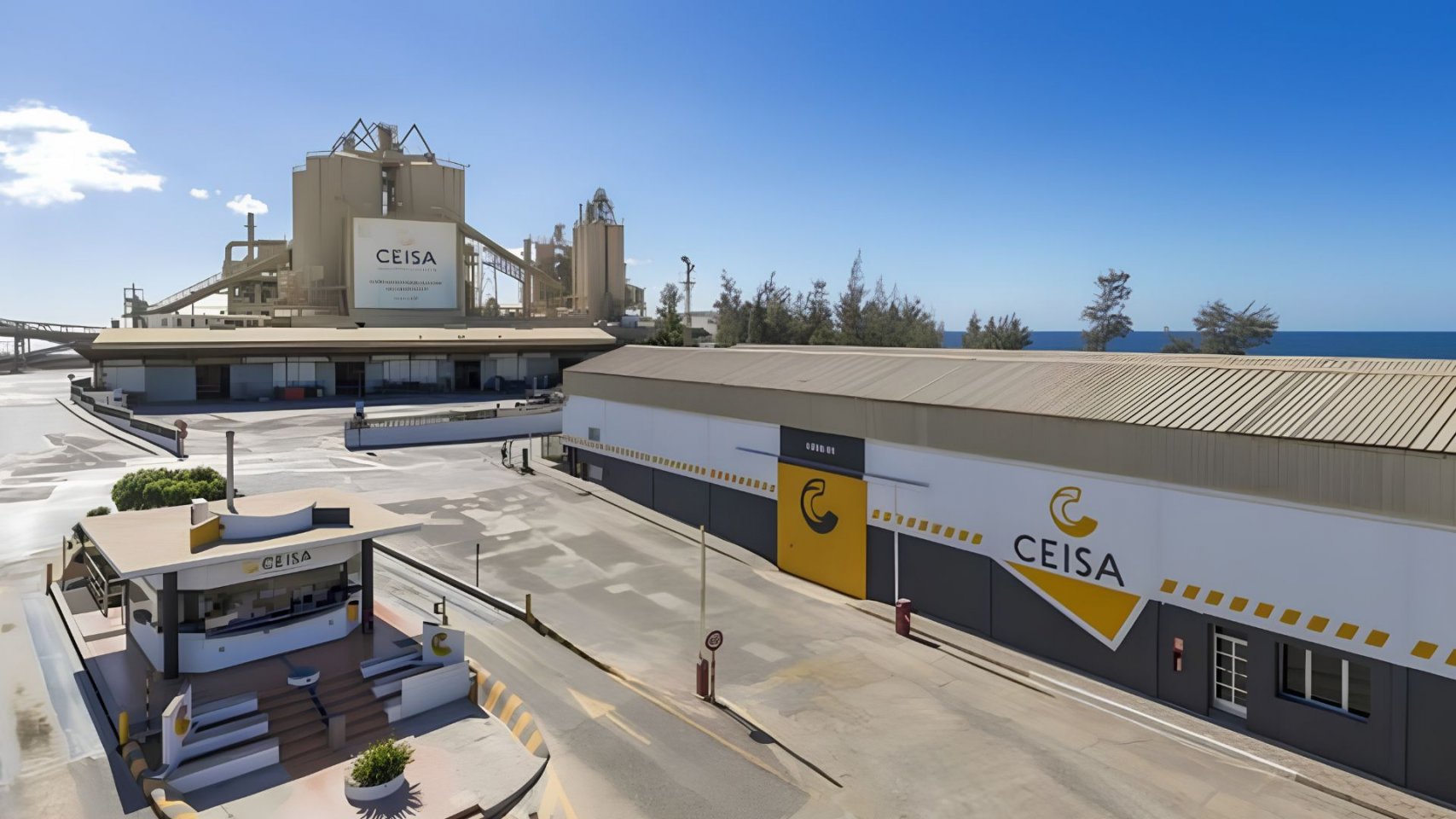
The debate on the sustainability of the island's tourism model also encompasses the coexistence of industrial and tourist uses along the coast, a dilemma that José María Mañaricua, president of the FEHT (Federation of Hotel and Tourism Businesses), addressed with absolute clarity this Tuesday when discussing the El Pajar area: "What we in the sector clearly understand is that industries should be located on industrial land, just as hotels and apartments should be located on tourist land. In the case of that area of Santa Águeda, it's an area that the Pío (a local government plan) that was overturned envisioned as having future tourist development. We're talking about industrial use of that area when we understand that industrial use should be in a port like Arinaga, which has low utilization and an entire industrial park ripe for development. It would be ideal for the Santa Águeda cement plant to move to that area, allowing for the development of the entire area for tourism. This is a unique area of Gran Canaria where significant employment and wealth can be generated, foreign currency from international visitors can be brought in, and it can become a future development hub for Gran Canaria, putting the island on everyone's lips as a unique destination." tourist".
The tourism employers' association of the province of Las Palmas has focused on the need to protect family-run businesses from dependence on foreign investment funds, advocating for a model of constant reinvestment that guarantees local decision-making. José María Mañaricua, operations director of Gloria Thalasso & Hotels and president of the Las Palmas Federation of Hospitality and Tourism Businesses, outlined the pillars of a trajectory that spans decades in the archipelago, recalling the initial skepticism that arose when the construction of the large San Agustín complex was built: "Many people thought a madman would undertake a project of that scale."
The family group's corporate philosophy is based on reinvesting 100% of profits back into the business, a principle passed down through generations where "profits are reinvested in the business to grow and ensure its long-term viability." This accumulation of equity, combined with bank financing, supports the construction of their fifth property in Costa Teguise, a five-star luxury resort on a 70.000-square-meter beachfront plot in Lanzarote, scheduled to open at the end of 2028.
The shift towards the ultra-luxury segment responds to the demand for extreme personalization and differentiated experiences sought by international source markets. Alongside the evolution of accommodation options, the hotel sector in southern Gran Canaria simultaneously faces critical structural challenges, such as the commercial obsolescence of some recreational areas in key tourist municipalities like San Bartolomé de Tirajana. Mañaricua critically points out that there are "50-year-old shopping centers" there that require urgent modernization to avoid driving away complementary businesses.
In the workplace, Mañaricua denounced the disparity in the treatment of absenteeism, warning that "public sector absenteeism is three times higher than private sector absenteeism" and erodes the ability of public administrations to respond to the essential services demanded by citizens. This institutional dysfunction extends to the real estate market and access to housing, where the president of the hotel association harshly criticized the fact that "40% of the price of housing is taxes," while the scarcity of developable land and the paralysis in the construction of social housing exacerbate the pressure on workers and residents of the archipelago.
The debate on the sustainability of the island's tourism model also encompasses the coexistence of industrial and tourist uses along the coast, advocating for the relocation of heavy industry activities, such as the cement plant in Santa Águeda, to underutilized port infrastructure like the Arinaga dock. At the same time, the defense of local business roots is being consolidated as a fundamental guarantee, with warnings that "the danger when hotel companies end up in the hands of foreign investment funds is that future decisions about those assets will be made elsewhere."
The Canary Islands' hospitality sector's roadmap for the coming years combines the modernization of traditional hotel infrastructure, a commitment to excellence in the high-end segment, and the demand for profound administrative reforms to resolve bottlenecks in housing, infrastructure, and taxation. The experience accumulated by family businesses in southern Gran Canaria confirms that the stability of the archipelago's main economic engine depends on financial strength, a long-term commitment to the region, and the ability to adapt to an increasingly competitive global market.
The projection of this family management model into the coming years demonstrates that reinvesting profits and defending business autonomy are the best defense against the volatility of international markets. Operators in the sector argue that maintaining local control over tourism assets ensures the preservation of jobs and wealth in the islands, recalling the founding family's maxim: "It's cold outside the company."