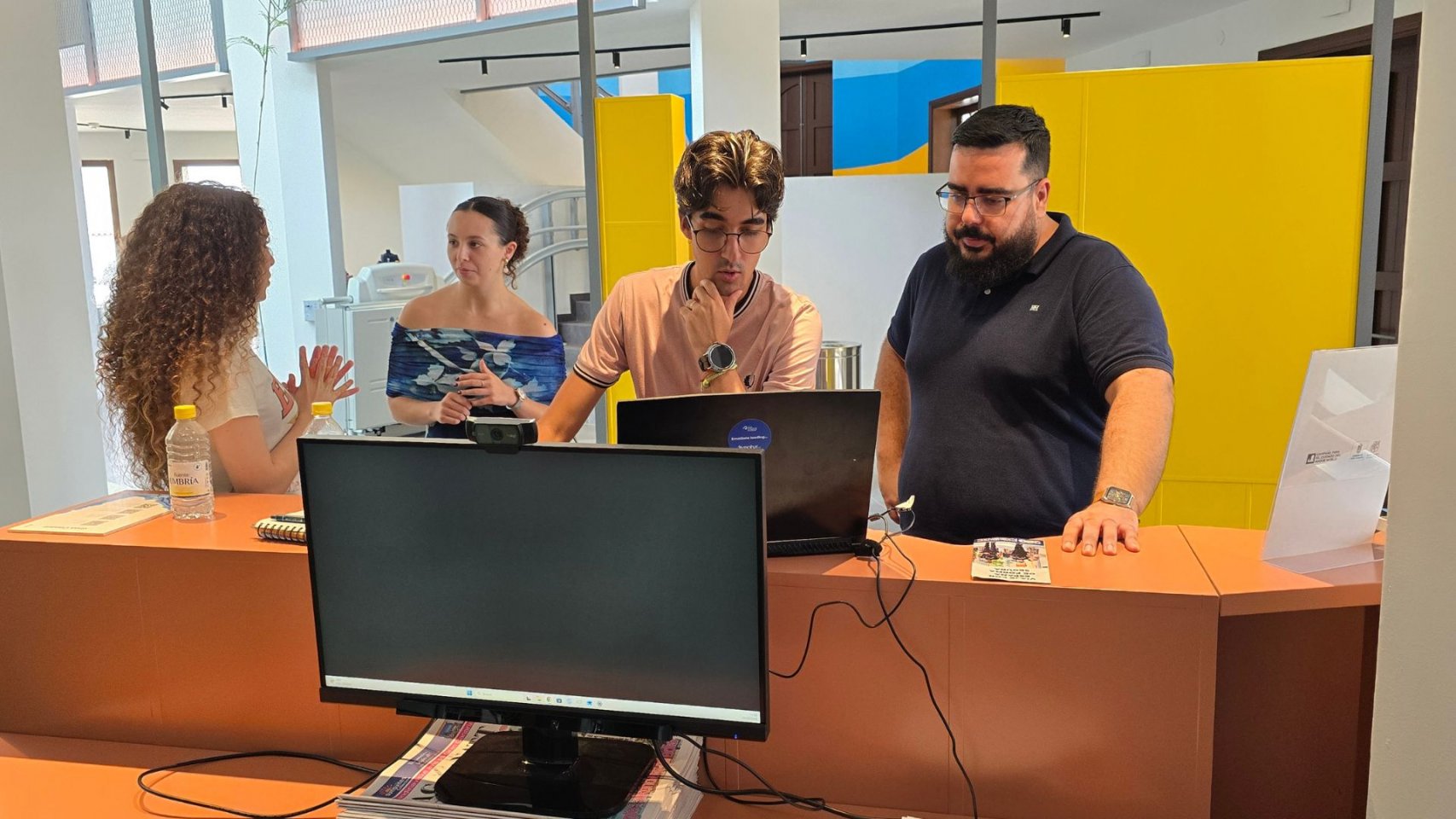
The study, conducted at the Island Tourism Center, combines eye tracking, analysis of facial microexpressions, and questionnaires to compare the image projected by Gran Canaria with the one actually perceived by visitors.
Gran Canaria Tourism is collaborating with EMOTUR Lab and the University Institute of Tourism and Sustainable Economic Development (TIDES) at the University of Las Palmas de Gran Canaria (ULPGC) on a new study with tourists, which began on October 15th at the Island Tourism Center (CIT). The research analyzes visitors' responses to 40 tourist attractions in Gran Canaria with the aim of gaining a more precise understanding of the relationship between the image the destination projects and the image perceived by visitors.
The fieldwork, conducted by the research teams at EMOTUR Lab and TIDES, combines two neuromarketing techniques with a subsequent questionnaire. The first is eye tracking, which records where each participant's gaze is fixed, for how long, and in what order. This makes it possible to identify which elements of each resource attract the most attention and interest, and which have less capacity to capture the eye.
The second technique is face coding, or facial microexpression analysis, used to study the emotions evoked by the displayed images. Both measurements are complemented by a questionnaire that gathers each tourist's expressed perception, allowing for a comparison of their statements with the visual and emotional responses recorded during the test.
The combination of these information sources is precisely one of the research's main strengths. Unlike methods based solely on surveys, this study incorporates data on observed behavior during the experience, allowing for a joint analysis of attention, emotion, and reported perception. The results will offer a more comprehensive understanding of how certain resources contribute to building Gran Canaria's tourist image.
Once the fieldwork is complete, the data obtained will be processed and analyzed by the research teams. Gran Canaria Tourism will subsequently publish the results and main conclusions of the study, making the knowledge generated by this research available to the sector and helping to guide future decisions related to the promotion and communication of the destination.
EMOTUR Lab is the neurotourism laboratory of the University of Las Palmas de Gran Canaria, affiliated with the TIDES Institute and specializing in the study of the emotional and cognitive dimensions of the tourist experience. Its research focuses on aspects that traditional methods do not always allow for direct observation, such as attention, emotions, and specific processes involved in the selection, experience, and recall of a destination. To this end, it utilizes technologies such as eye tracking, biometrics, electroencephalography, facial expression analysis, virtual and augmented reality, and artificial intelligence.
Their work focuses on translating scientific research into concrete needs for the tourism industry. The goal is to transform information obtained about actual visitor behavior into useful knowledge for destinations and businesses, both in the design of products and experiences and in communication, marketing, and decision-making. This connection between the university and the tourism industry has also underpinned an ongoing relationship with Gran Canaria Tourism.
The new study on a wide range of tourist resources in Gran Canaria delves deeper into this shared trajectory and seeks to obtain particularly valuable information for destination management. The combination of different techniques will allow researchers to compare what tourists say about the analyzed images with data obtained on their attention and the emotions these images evoke. The results will provide a more precise understanding of how visitors perceive these resources and offer new evidence to guide destination promotion based on scientific knowledge.