


The artisans open their workshops, in a series of audiovisual pieces, to show their work processes, offer their testimony, history and culture, and thus become protagonists of the tourist communication of Gran Canaria
Francisco Torres's hands polish bone and metal to bring the traditional naife to life. Blanca Rosa Sosa's hands draw patterns in openwork with the care and dedication that centuries of history, tradition, and inherited wisdom demand. Both are protagonists, along with other masters of ceramics, blacksmithing, jewelry, leatherwork, and glassmaking, among other crafts, who, through their voices, techniques, and expert gestures, bring to life ' The Hands of Gran Canaria '.
The Ministries of Tourism and Industry, Commerce and Crafts, headed by counselors Carlos Álamo and Minerva Alonso, respectively, collaborate, together with the Foundation for Ethnography and the Development of Canarian Crafts (Fedac) in the launch of an audiovisual campaign that It aims to promote island crafts and their sale among tourist clients.
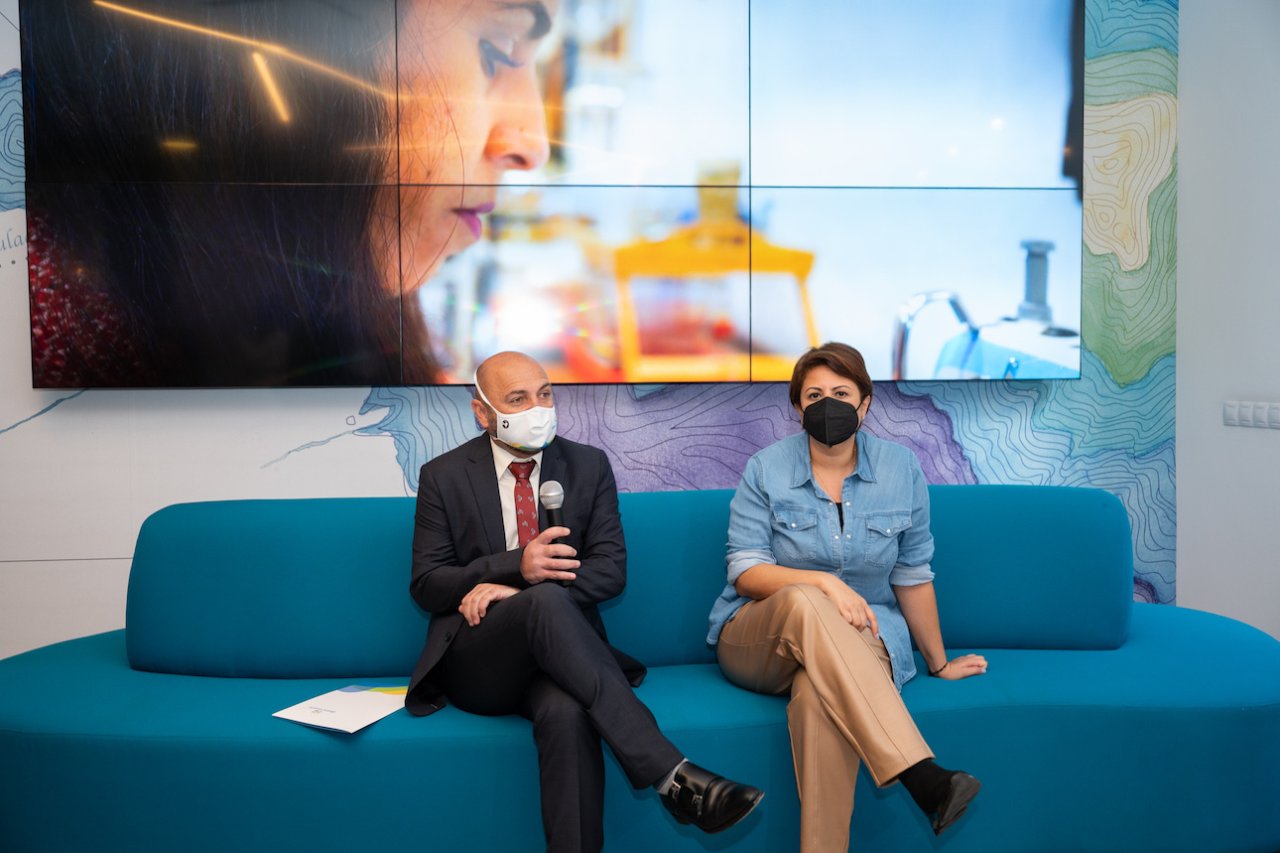
This initiative, created between FEDAC, and the two areas of the Cabildo of Gran Canaria, aims to promote the FEDAC seal of guarantees among the tourists who visit us, in addition to making it known among the local population, to communicate that on the island we have a seal. that distinguishes the authentic craftsmanship of Gran Canaria. To achieve this, this campaign is based on a series of audiovisual pieces lasting two minutes each, in which the entire focus falls on the craftsman and craftswomen, their techniques and, especially, on products in which the high quality stands out. quality of its preparation and history.
“This is an initiative that completely responds to the roadmap of this Ministry and of the FEDAC itself, which is none other than making known and valuing our heritage and our identity in this case through the trades. artisans, of the unique products that only the hands heirs of a valuable tradition are capable of creating and that the new generations must be able to appreciate, and what is not known is valued or protected," said the Minister of Industry, Minerva Alonso.
This initiative is now in its second edition, after a first launch in 2018. The new videos are made up of testimonies edited with local artisans, who open their workshops and show their techniques, experience and work processes. In this way the product and its creator become absolute protagonists of tourist communication.
“ They themselves recommend buying handcrafted products, explaining the importance of supporting local products, unique and unlike any other. An authentic product. Real craftsmanship. Created by real people, handmade,” explained Tourism Councilor Carlos Álamo. “ We will ensure that these pieces reach our main markets and our potential customers,” he added.
“At Gran Canaria Tourism, we are convinced of the competitiveness of our products, both gastronomic and artisanal, and also that all the island's municipalities have significant attractions to offer as a tourist destination. This, along with other initiatives such as those related to rural or active tourism, reflects our interest in distributing the wealth generated by the tourism industry more equitably, something that is one of our priorities in this legislative term,” noted Carlos Álamo. “ Without forgetting, of course, that our main product and the foundation of our industry is sun, beaches, and the traditionally tourist-oriented municipalities of southern Gran Canaria. But we understand that we can complement this and advance towards excellence with the contributions of all 21 municipalities on the island.”
The artisan product builds a lasting memory of the trip. Their durability stands out and they often have an emotional connection. “That makes it something valuable for the tourist branding of Gran Canaria,” the councilors explained.
But beyond their utilitarian value for the tourism industry, handicrafts, by virtue of being non-industrialized , unique, and personalized, possess a powerful symbolism. They reaffirm that a destination has its own identity. In this sense, the possibility of communicating that the place one is traveling to has much to tell—such as ancient stories and traditions—is valued. And that transforms the destination into something different, far removed from the more common commoditization or commercialization.
“ Sustainability will be the cornerstone of the travel industry in the next generation. And craftsmanship, with all its cultural and identity-based underpinnings, can be a valuable asset to highlight in the island's tourism communication,” noted Carlos Álamo.
The pieces have been prepared in 2-minute spots, seeking to include different trades. The participants in this 2nd edition are: Tuula Giraldo (glassworks); Santiago Carballo (leather goods); Ulrike Güsse (weaving); Arantxa Arenas (fashion); Aristides Martín (ceramics); Claudia Heller (jewelry); José Manuel Robayna (forge); and Pedro Ricardo Marín (paper and cardboard crafts).
The content has been produced in Spanish, English, and German. It will be available on various platforms, although it also has its own ' minisite ' integrated into the grancanaria.com website (www.lasmanosdegrancanaria.es).
The pieces will also be distributed periodically through the social networks of FEDAC and Turismo Gran Canaria. Outside of online distribution, the pieces have also been adapted to formats that support local sales, since both the Triana 93 Tourist Office and the future Faro Maspalomas office have nearby or integrated FEDAC stores. in the same space. For this reason, adaptations of the videos have been prepared for large screens that cover the information spaces at the destination. The aim is for the Tourism offices to add the image of artisan work, and for the FEDAC brand to be integrated into the recommendation that the informants offer to tourist clients on a daily basis.