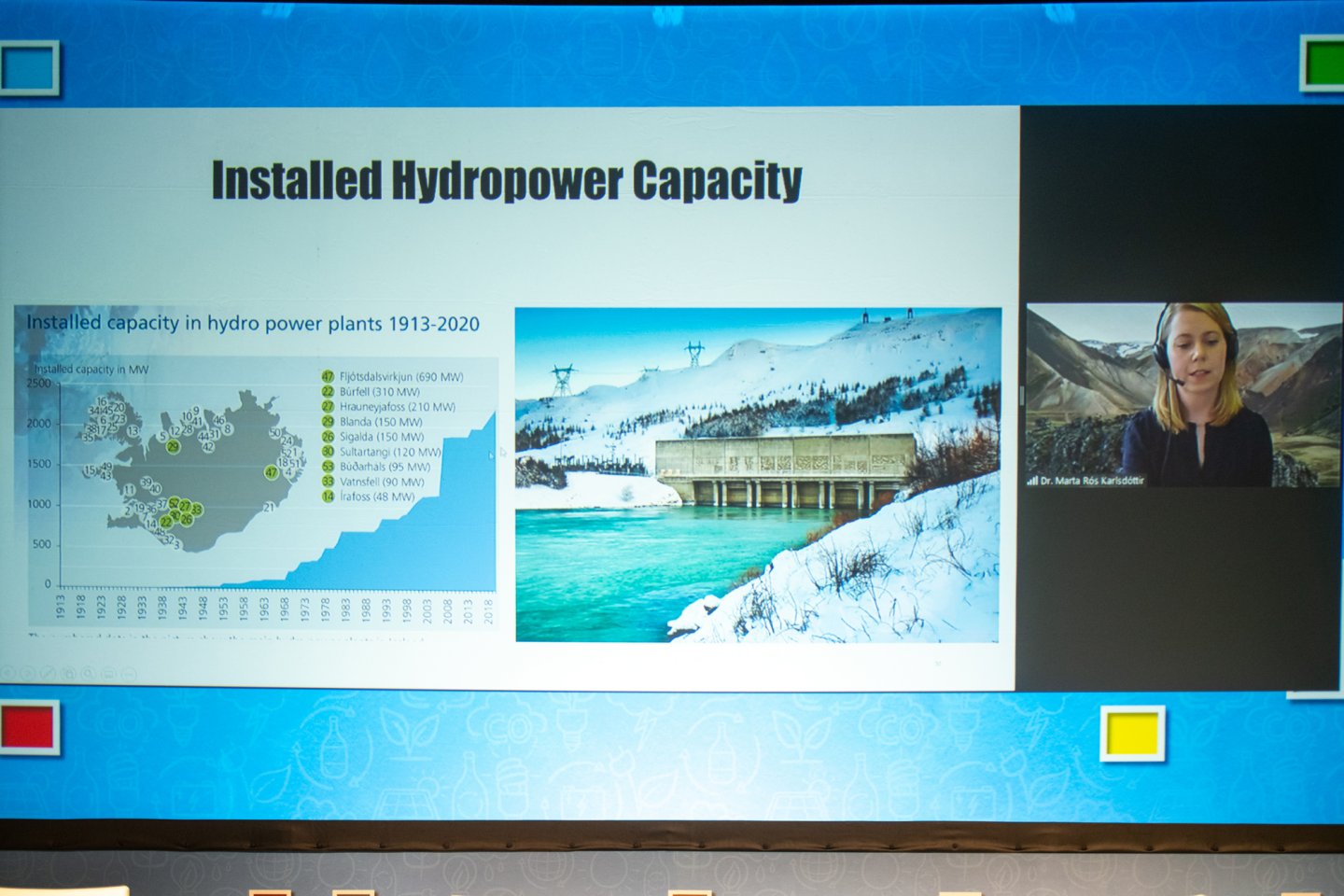
“Using natural resources in an innovative way is an expensive journey and takes time, but we are moving forward in a sustainable way,” said Marta Rós, head of the sustainable use of natural resources at the National Authority of Iceland.
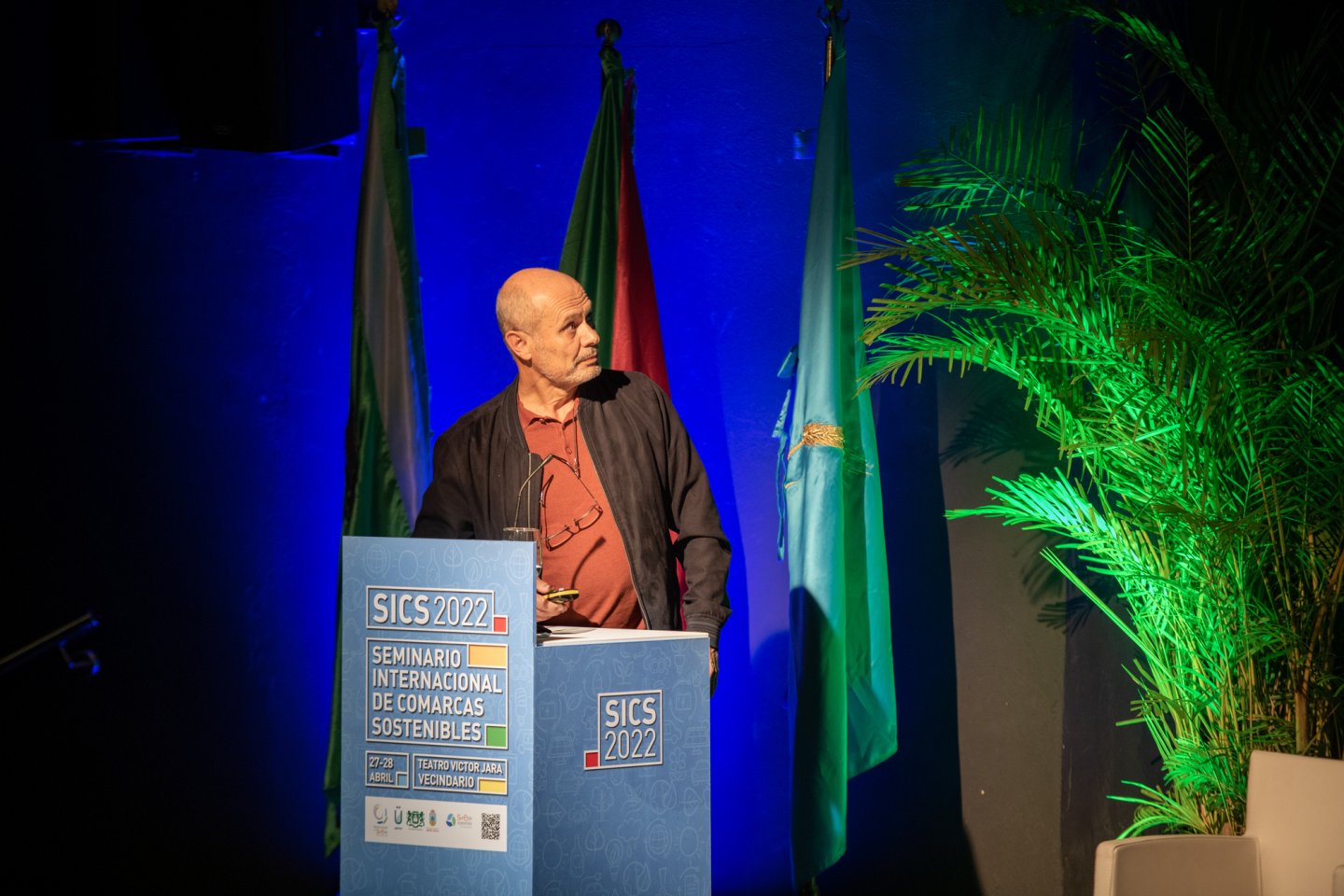
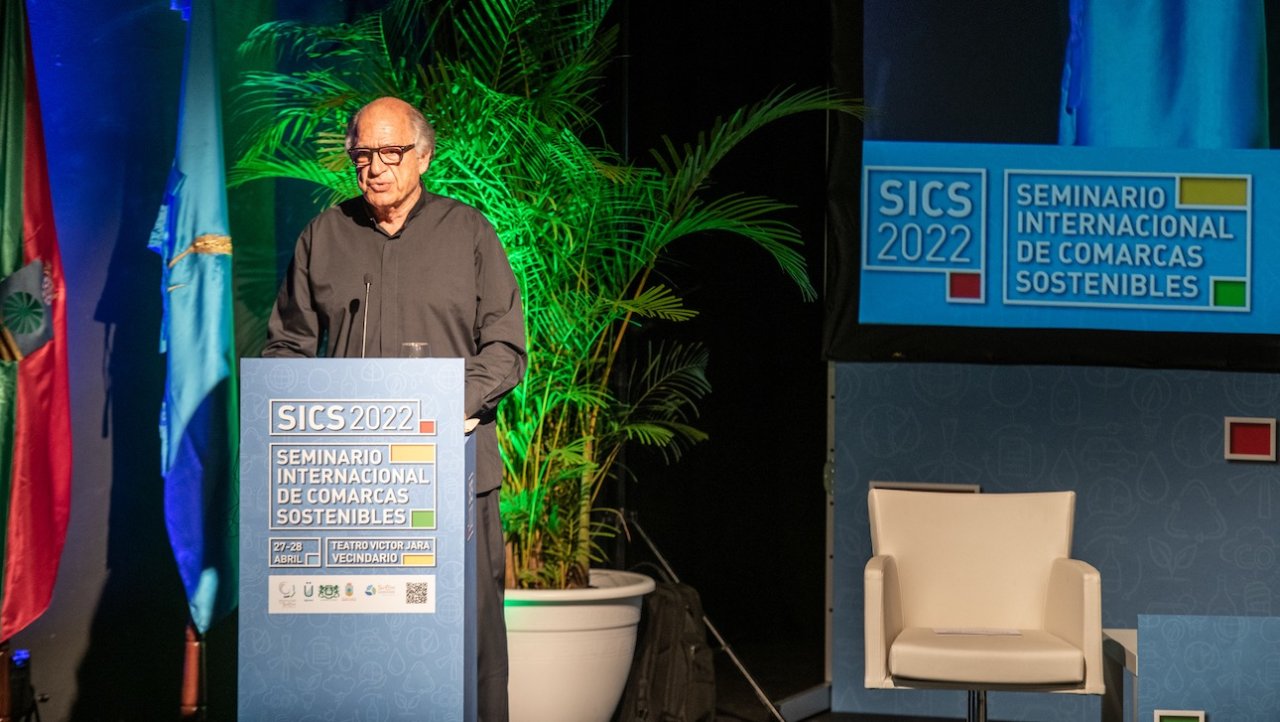
Dr. Michael Ben-Eli, founder of the Sustainability Laboratory and author of the 'Five Basic Principles of Sustainability', opened the International Seminar on Sustainable Regions that has returned to the Southeast of Gran Canaria after two years of absence due to the pandemic. In his presentation, Ben-Eli tried to shed light on the definition of the concept of sustainability and tried to answer the question of whether “we should continue to look at sustainability as an ultimate goal or is there something that takes us further.”
In this search for answers, the doctor highlighted population as one of the most important factors to take into account when it comes to sustainability: “In sustainability, population and carrying capacity are the two important variables, but many times We do not pay attention to these aspects because both are taboo topics in the international community.”
Based on the fact that sustainability is a circular system in which the population and the environment affect each other, Ben-Eli considers that sustainability “is not an objective in itself, but a state of the system” and intends to be “a dynamic balance in the process of interaction between the population and the carrying capacity of its environment, so that it develops its full potential without producing irreversible or adverse effects on the environment.”
In that sense, currently "there seems to be a lack of balance and the significant increase in the world's population represents an important change in the relationships of humans with the planet," said Ben-Eli. “We now find ourselves at a crossroads between sustainability or continuing to deteriorate the planet, but the rate of deterioration is enormous and current trends are very negative in relation to desertification or loss of biodiversity.”
The question according to Ben-Eli is “whether we will be brave enough to change what we are doing and leave a better future for future generations.” “It is a project that requires the collective effort of all of us who inhabit the planet,” he added.
The sea, the best option to install wind turbines
In his speech, the technical director of the Wind Business Association (AEE), Tomás Romagosa, assured that in the short and medium term, offshore wind energy “will gain more strength in Spain” as it is already doing in other countries, thanks to which is a solution to generate green energy, without CO2 emissions. “It is clean and sustainable” and also has other advantages such as that at sea the wind is stronger and more stable than on land. On the other hand, "at sea we do not find the logistical complications that we find on land, because the installation is done from a port and because there are fewer constraints regarding the size of the components." That is to say, “larger wind turbines can be installed and use more power,” he said.
Romagosa explained why Spain has great potential in this area and is the third largest exporter in the world of wind turbines and components related to their manufacturing. In addition, it has a “powerful” naval and shipyard industry, an advanced technological infrastructure and several areas with very good wind, among which is the Archipelago. "Here the winds are good and stable, thanks to the trade winds, and there are viable areas to implement parks of this type." So much so, that the only wind turbine currently installed in Spain is located in the Canary Islands, on the Gran Canaria coast of Jinámar.
According to Romagosa, the only problem in the Canary Islands is that the continental shelf is very narrow, which makes it difficult to install some types of wind turbines. Even so, the Canary Islands can be the “tip of the spear” due to several factors, such as the fact of having a low penetration of renewable energies, a greater urgency to decarbonize and greater exploitation of the territory.
In this sense, Romagosa highlighted the need to establish a regulatory framework, a series of regulations that indicate how to process the installation and management of offshore wind farms. Once this regulatory framework is closed, an auction may be called at the beginning of next year and Spain, “the country that has the most patents in floating energy,” may have an opportunity in the race to see which system is the most efficient in costs and energy and which is manufactured faster. “In this race, Spanish companies are among the best positioned,” concluded Tomás Romagosa.
Iceland, role model
The person responsible for the sustainable use of natural resources at the National Authority of Iceland, Marta Rós Karlsdóttir, explained at the Seminar how 99,9 percent of the electricity that Iceland currently consumes currently comes from renewable energy.
In recent years, the country has undergone a transition from using fossil fuels to heat homes, to now where 90 percent of homes are heated with renewable or geothermal energy. “The reduction of CO2 emissions just by eliminating traditional home heating has been incredible,” said Ros, who highlighted other uses that Iceland makes of this geothermal energy, such as the outdoor swimming pools that have become a meeting point. for citizens, in agriculture or even to heat a beach, whose sea enjoys higher temperatures thanks to this type of energy.
“It has required a lot of entrepreneurship and a lot of innovation,” clarified Marta, who nevertheless recognized that Iceland has the advantage of having access to a large amount of natural energy resources. Not in vain, it is one of the volcanic islands with the largest geothermal reserves in the world and glaciers that generate water that the country accumulates to produce hydropower, one of the country's main sources.
“Using natural resources in an innovative way is an expensive journey and takes time, but we are moving forward in a sustainable way,” said Marta Rós.
Sustainable development vs sustainable balance
Also participating among the speakers was the doctor in Marine Sciences from the University of Las Palmas de Gran Canaria, José Juan Castro, who brought to the table the debate between Sustainable Development and Sustainable Balance. As an example of the imbalance that can occur in a territory, Castro presented the case of Easter Island, which, with approximately half the surface area of the island of El Hierro, suffered “immense degradation of the ecosystem” by the indigenous people, who decimated their natural resources to build the famous stone statues called “moais”.
“The construction of the moais caused the collapse of the island. "They cut down all the trees, leaving it at the mercy of the air," explained the doctor, who attributed this degradation to the fact that with the installation of these sculptures the carrying capacity of the island was not taken into account "and it collapsed, losing its sustainability."
“Possibly we are directing the entire planet to become a great Easter Island,” explained José Juan Castro, who argued this opinion in the overpopulation that the Earth already registers, the changes in the climate, the degradation of the soils and the hydrosphere, the overexploitation of natural resources and globalization, from the point of view of pollutants, diseases, etc.
In the Canary Islands, the development strategy has also caused deforestation, soil degradation, desertification, loss of habitats and biodiversity and pollution, among other aspects.
For this reason, José Juan Castro considers that, in the particular case of island systems, “a sensible, although very controversial, strategy would be to establish limits on the levels of resident and floating population.”