Alberto Seña stated that just replacing diesel in gas turbines with hydrogen “could mean savings of 70 million euros in the Canary Islands”
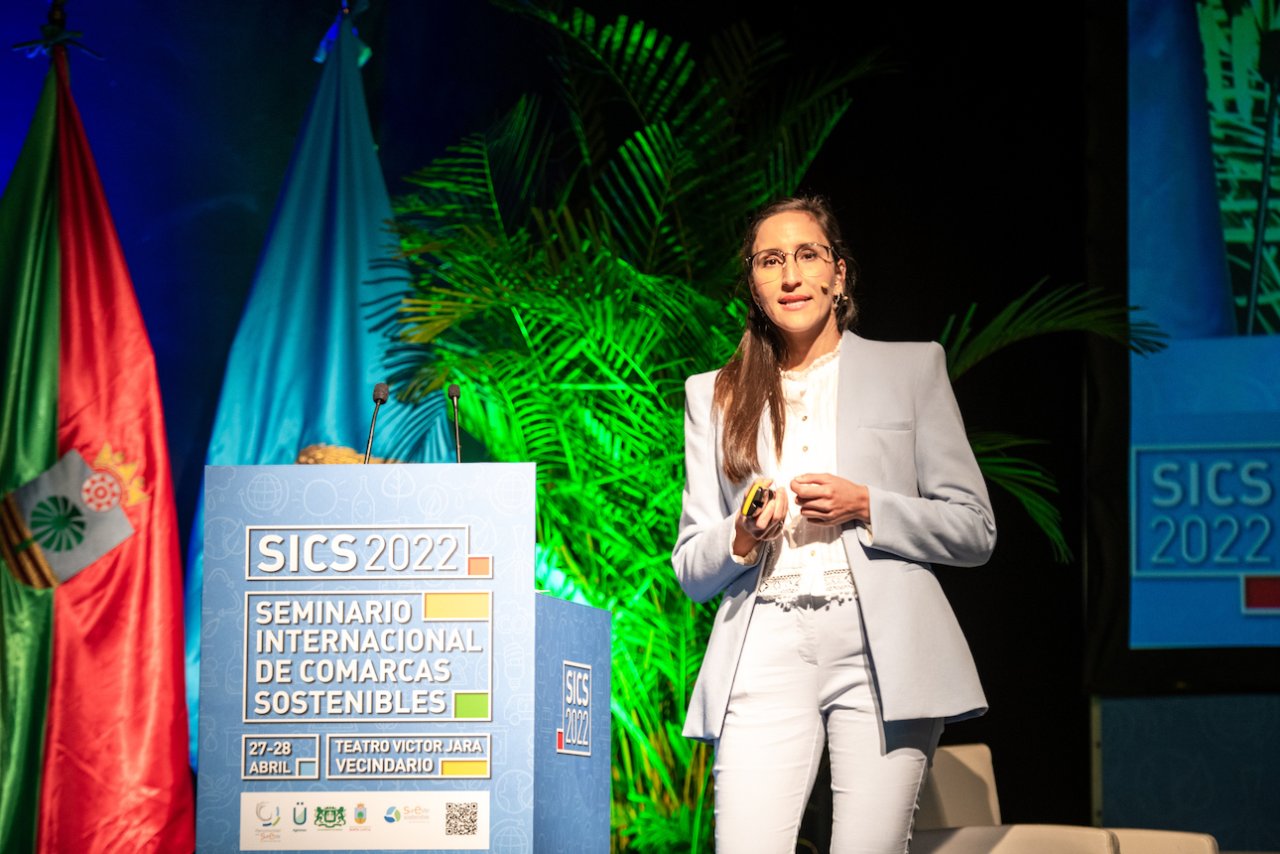
ULPGC researcher Noemí Melián assures that “we need emerging technologies in desalination to face new challenges that allow us to adapt to climate change”
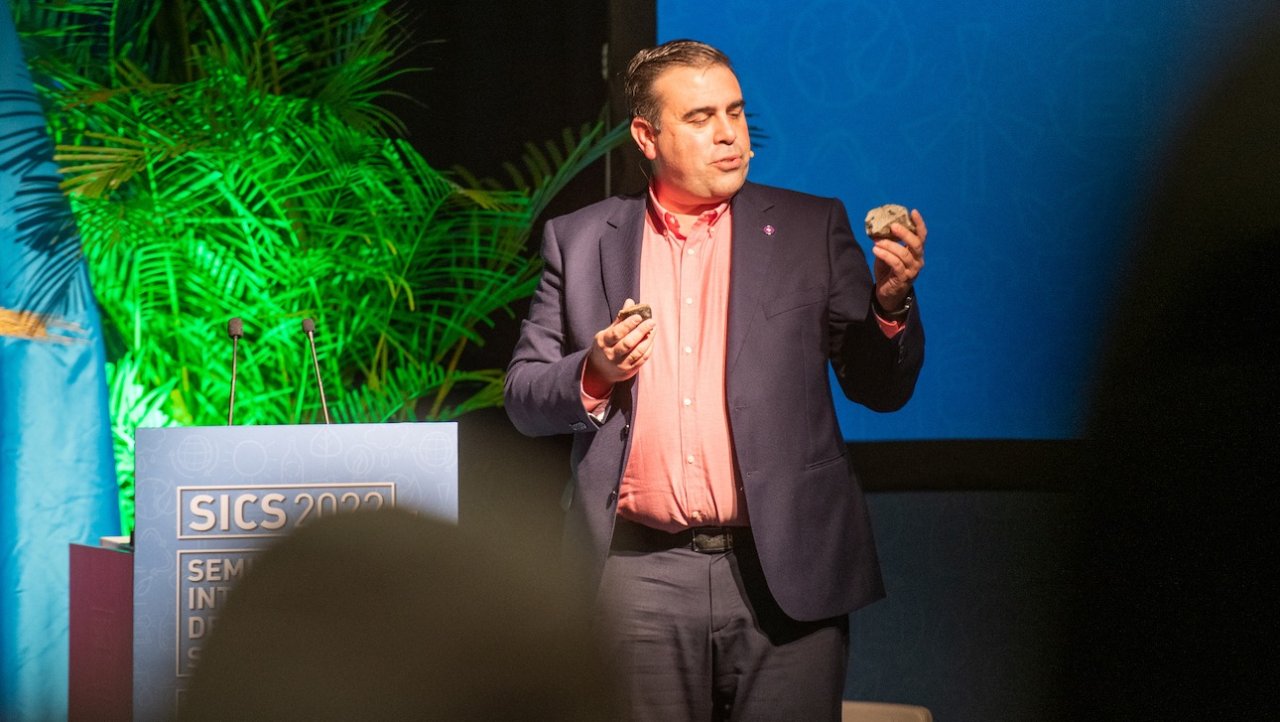
“It is vital to know the mineral resources of rare earths of high technological value that we can have in the Canary Islands in volcanic and sedimentary rocks, both underwater and terrestrial.” The professor of Applied Physics at the University of La Laguna, Jorge Méndez, spoke yesterday at the International Seminar on Sustainable Regions to talk about “rare earths”, these “industry vitamins” that represent “an opportunity for technological development” .
In the fight against climate change, “rare earths play a key role because they are essential for the decarbonization of the economy,” said Méndez, who highlighted that critical metals and, in particular, “rare earths are the key to the vault.” for the long-awaited energy transition towards a more sustainable world.”
From photovoltaic solar panels, the magnets used in the electric motors of hybrid cars or wind energy turbines depend on this type of materials. In that sense, the professor pointed out the need to “seek new sources of these precious resources” as a necessity for the future development of society. A challenge that the MAGEC-REEsearch project ("Materials for Advanced Energy Generation and exploration of rare earths in the Canary Islands") tries to respond to, in which several entities are involved, including the Canarian universities, the Spanish Institute of Oceanography and the Museum of Natural Sciences of Barcelona.
Among other aspects, this project explores the traditional salt flats of the Canary Islands as a “natural laboratory” for the sustainable generation of “green hydrogen”. At the same time, the project also covers the geological exploration of “rare earth” mineral resources of high technological value in the Canary Islands in volcanic and sedimentary rocks, both terrestrial, especially the surface of Fuerteventura, and in the seamounts of the Canary Islands.
“Having this strategic information is vital,” said Méndez in his speech; “We deserve to investigate to know the resources we have, because here in the Canary Islands, if we think about it, we have everything,” said the ULL professor, convinced that “this type of strategic minerals are what will allow us an ecological transition.” ", because "renewable energies critically depend on these "strategic metals", so difficult to find in sufficiently abundant concentrations to make their exploitation viable and economically profitable.
Hydrogen, an opportunity in the Canary Islands
Alberto Ceña, director of the Bepte company and technical advisor to the Wind Business Association, spoke at the International Seminar on Sustainable Regions about hydrogen, “the supply of the future”, which he considers “a clear option for the management of renewable energies and long-term storage.
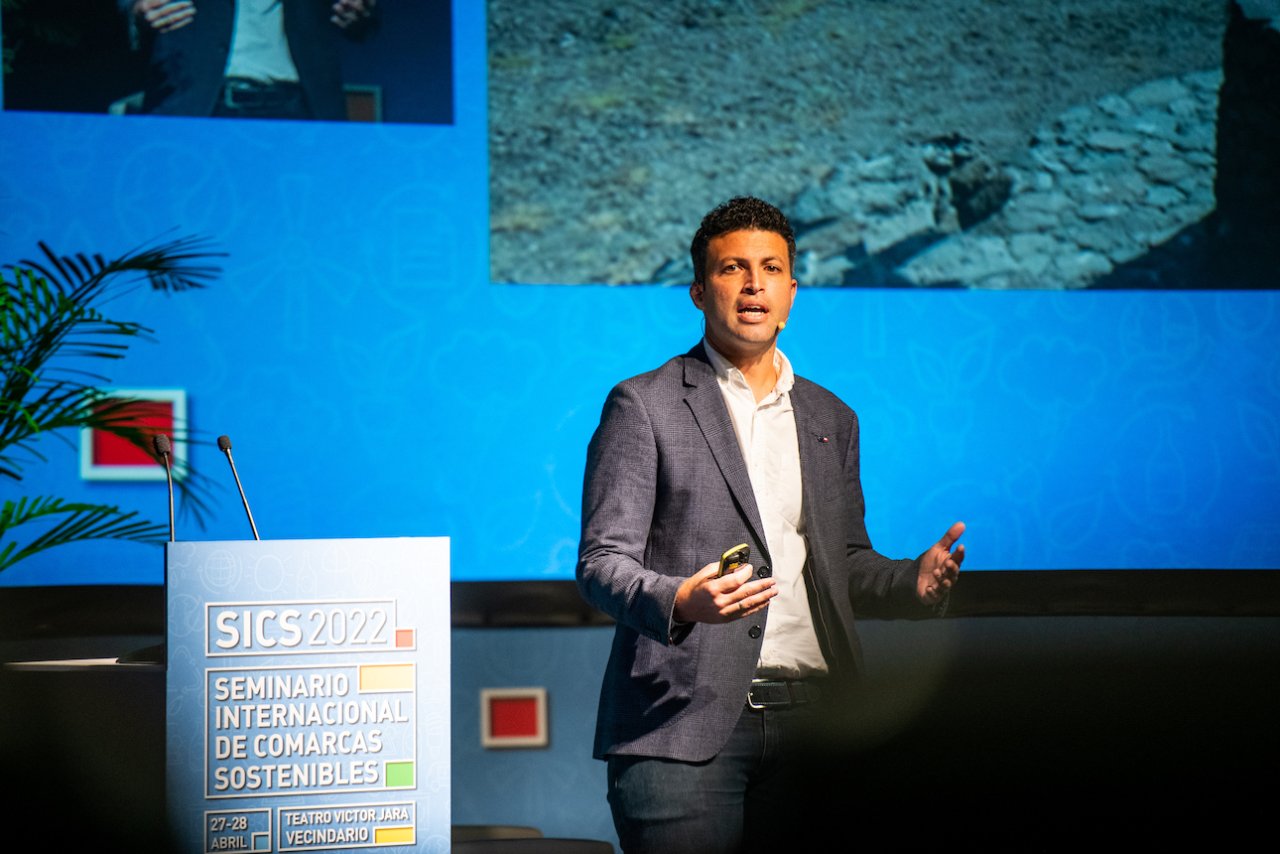
According to Ceña, hydrogen can mean “significant savings in the substitution of fossil fuels in electricity generation.” In fact, just replacing diesel in the gas turbines with hydrogen “could mean a saving of 70 million euros in the Canary Islands,” explained the technical advisor for whom the Archipelago is the ideal territory to start with a pilot experience.
In that sense, although “reducing the cost of production is key to promoting the use of green hydrogen as fuel,” Ceña assured that hydrogen presents many opportunities in maritime and medium-term air transport.
Examples of sustainable desalination
The researcher from the Renewable Energy Systems research group at the University of Las Palmas de Gran Canaria, Noemí Melián, delved into one of the emerging technologies in desalination, reverse osmosis, as a solution in a context in which “exponential growth population and climate change cause the need for alternative water resources. “We need emerging technologies to face new challenges that allow us to adapt to climate change,” said Melián, who pointed out the need to continue working to find solutions to water quality problems and respond to how to avoid environmental impact and how to adapt to circular economy criteria, among other issues.
The researcher recalled that currently, “the demand for water is difficult to bear with the water resources we have,” which is why, with more than 350 plants, Macaronesia is the territory with the most desalination plants per inhabitant. "We have the perfect setting to innovate: more than 50 years of experience, an ideal climate, the infrastructure and pilot plants to experiment...", Melián noted.
The researcher recalled that the first experimental direct osmosis plant in Macaronesia has been located in the Southeastern Commonwealth since April 2021, which shows the involvement of the municipalities of this region in sustainable development and the search for more efficient solutions to care for environment.
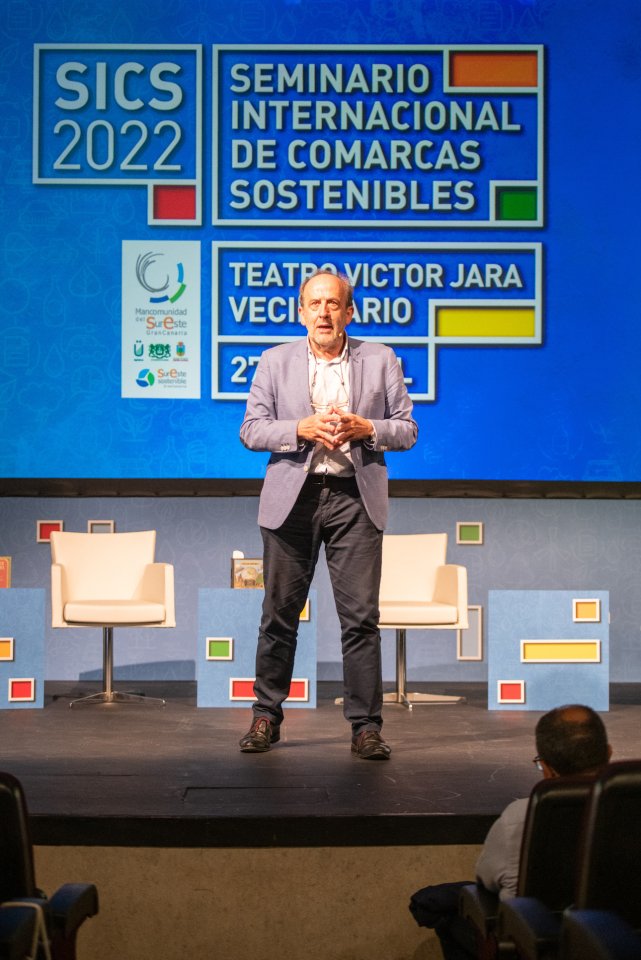
For his part, ULPGC researcher, Pedro Cabrera, explained his experience in making a small desalination plant more flexible in which a wind turbine was installed to increase the use of renewable energy in the plant.
Thanks to the project, “a novel control system to adapt the consumption of that plant to a wind turbine” was installed in the desalination plant, located in the facilities of the Canary Islands Technological Institute (ITC) in Pozo Izquierdo. In this way, “we got the plant to regulate its consumption based on the energy generated by the wind turbine, thus becoming more efficient and sustainable.”
In this way, not only was the consumption of desolation made more flexible; The pilot test also demonstrated that “artificial intelligence techniques offer great possibilities for these objectives and others in desalination issues,” said Cabrera.