The president of the Second Chamber of the Supreme Court spoke at the conference on 'Trends and challenges of compliance in Spanish universities: towards a culture of integrity and good governance'
Alain Casanovas: “establishing mechanisms and organizational structures that contribute to responsible, ethical and legal management generates value for society and instills trust”
Enrique Álvarez Tolcheff: “unethical behavior and corrupt practices are more intolerable than ever”
Javier Martín Cavanna: “90% of public universities exceeded the percentage required to obtain the transparent rating”
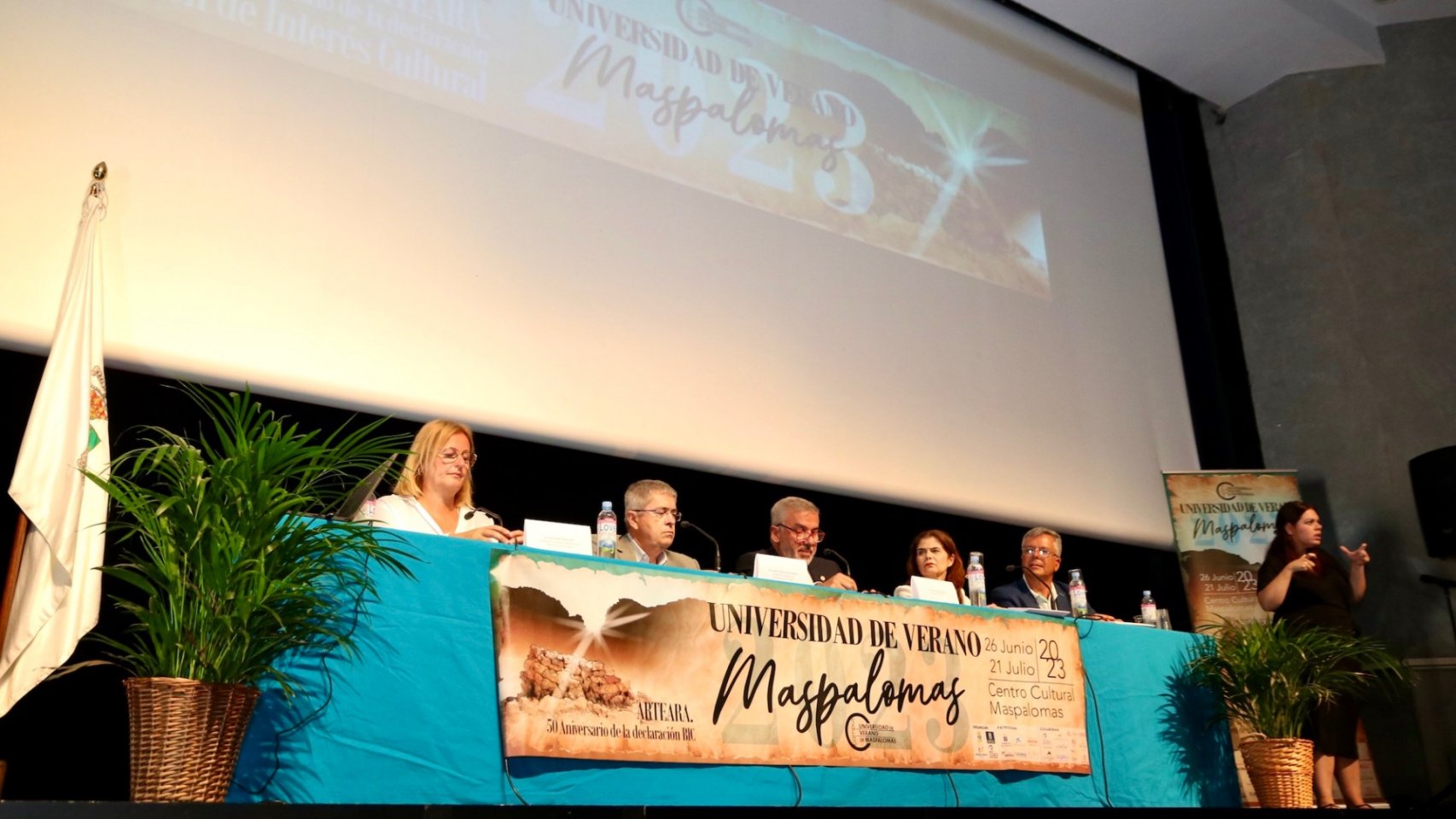
"Laws are sometimes made hastily, and I believe there is a bureaucratic tendency in the reporting channels that will cause serious problems in public administrations," said Manuel Marchena Gómez, president of the Second Chamber of the Supreme Court, at the national conference on 'Trends and challenges of compliance in the Spanish university: towards a culture of integrity and good governance', organized by the Social Council of the ULPGC, the Conference of Social Councils of Spanish Universities and the Foundation for Training and Research in Public Sector Auditing (FIASEP), held at the Maspalomas Summer University.
In his speech, 'Criminal liability of legal entities. The specific case of the university', Manuel Marchena spoke about the problems that Spanish universities are going to have regarding the criminal liability of the legal entity and the obligations that derive from the recent law on the protection of 'informants' or Law 2 /2023, of February 20, regulating the protection of people who report regulatory infractions and the fight against corruption.
According to this Law, the public university cannot be subject to crime, since it excludes the State, public administrations and, therefore, the rectors, "but the same does not happen for private universities, which can go to the bench. ".
This Law, of which Marchena makes a positive assessment, "is going to create many problems to which we will not be able to give an immediate response." This criminal liability of the Legal Entity represents a conceptual revolution in Law. "The reporting channels will be for reporting serious or very serious criminal or administrative infractions, which we are not aware of, because Article 33 of the Penal Code establishes minor, less serious and serious infractions. That is, the less serious and minor ones will be left out. of the functional spectrum of the complaint".

For Marchena, the biggest problem is found when a crime is reported, because the law opens the possibility for the internal service to open a three-month investigation, but in our procedural investigation system it can last up to two years.
He highlighted a ruling approved in his Chamber, the first that justifies the responsibility of the Legal Entity for not having a compliance agreement "to prevent risks and avoid the temptations of managers who want to obtain a benefit at the expense of the entity."
For responsible management
The second presentation was given by Alain Casanovas, considered an expert on this topic, who emphasized the need for any organization to have compliance models that guarantee "integrity and compliance with regulations." Casanovas, partner in charge of compliance services at KPMG Spain and director of the KPMG Compliance Think Tank , presented the paper 'The Scope of Compliance in Spanish Universities: A New Challenge for Universities and Their Governing Boards'.
Focusing on the university environment, he stated that organization and management models that consider this reality are also common, especially in Anglo-Saxon environments, with a greater tradition in this matter. “Establishing organizational mechanisms and structures that contribute to responsible, ethical and legal management is an example of good corporate governance, which generates value for society and instills trust.”
For all these reasons, Casanovas pointed out that more and more regulations, both national and international, are highlighting the need for compliance models and promoting their dissemination. “In this context, the requirements of the new Law 2/2023 on Whistleblower Protection and the frequent updates to the Spanish Penal Code can be understood.”
In the university sector, the Organic Law of the University System recognizes “the importance of management aligned with ethical parameters.” Specifically, both Articles 39 and 47 of this law assign to the social council of universities “the responsibility to ensure compliance with ethical principles and academic integrity, as well as anti-fraud guidelines, which must guide teaching and research, in collaboration with the bodies and plans that each university has in place for these purposes. This mandate aligns with the typical responsibilities of compliance departments operating in the world’s leading universities,” Casanovas explained.
Currently, robust compliance models require knowledge and proper application of national and international best practices, which are reflected in reputable international standards. "ISO standards are an essential reference point for understanding the behavioral and organizational parameters that underpin any modern compliance model ." According to the expert, their content helps meet the expectations of public administrations, users of the education system, and other stakeholders. They also facilitate compliance with legal requirements, such as those mentioned above. "Deficiencies in this area can lead to personal liability for those ultimately responsible for university management."
Enrique Álvarez Tolcheff then spoke, analyzing the 'Relationship between the exercise of internal control and compliance in the university setting'. Enrique Álvarez holds degrees in Law and Philosophy and is a civil servant in the Senior Technical Corps of the General Administration of the Community of Madrid, currently assigned to the Court of Auditors.
In his opinion, “meeting common needs through the efficient use of public resources is a pressing necessity. Unethical behavior and corrupt practices are more intolerable than ever.” For this reason, public controls, both external and internal, were ultimately created to achieve good public management. “New procedures and policies have recently been added to this function. Integrity systems, anti-fraud plans required by the European Union, and compliance programs represent an opportunity for improvement in the public sector in general and the university sector in particular.”
The next speaker, Javier Martín Cavanna, executive director of the Haz Foundation and associate professor at the IE Business School in the area of Corporate Social Responsibility, spoke about the 'Principles for determining good governance in universities: guidelines to promote their internal culture and its impact on society'. His presentation was given by Ana Suárez Calvo, advisor to the Social Council of the ULPGC and businesswoman.
Martín Cavanna explained that, in the last eleven years, the HAZ Foundation, formerly the Compromiso y Transparencia Foundation, through its reports and transparency seals, has accompanied Spanish universities “in their effort to be more transparent and accountable to the society of its achievements and results.”
During this period he said that we have been building with the universities, “the relevant areas of information, reformulating our indicators or incorporating new ones, and, when we have believed it was convenient, including some new content to respond to the information demands of the society, since society's information expectations are not something static and rigid, but rather they evolve in accordance with new challenges and challenges." In these ten years, new indicators have been added, such as those relating to the employability of students, the percentage of PDI who work at the university, where they have read the thesis, the functioning of the social council or information on ownership of private universities.
Cavanna acknowledged that universities have responded to that challenge, “significantly improving accountability on all of these issues. For the first time, in 2022, no public university has been rated as 'opaque' in the report. 90% of public universities exceeded the percentage required to obtain the transparent rating and the general average of transparency of the 49 public universities reached 86%. However, he considered that this general improvement of the public university has not been extended to private universities, “which continue to maintain low transparency rates globally. Only six private universities (25% of the total) earned the transparent rating, compared to 44 public universities. Furthermore, the Organic Law of the University System (LOSU) poses new challenges to the social councils, entrusting them with promoting a new culture of integrity and good governance in the university.”
Cavanna concluded his speech by indicating that “for all these reasons we understand that our reports and transparency seals continue to be more necessary than ever and, above all, that the constructive dialogue that we have maintained throughout these years with universities must continue to be enriched and expanding.”