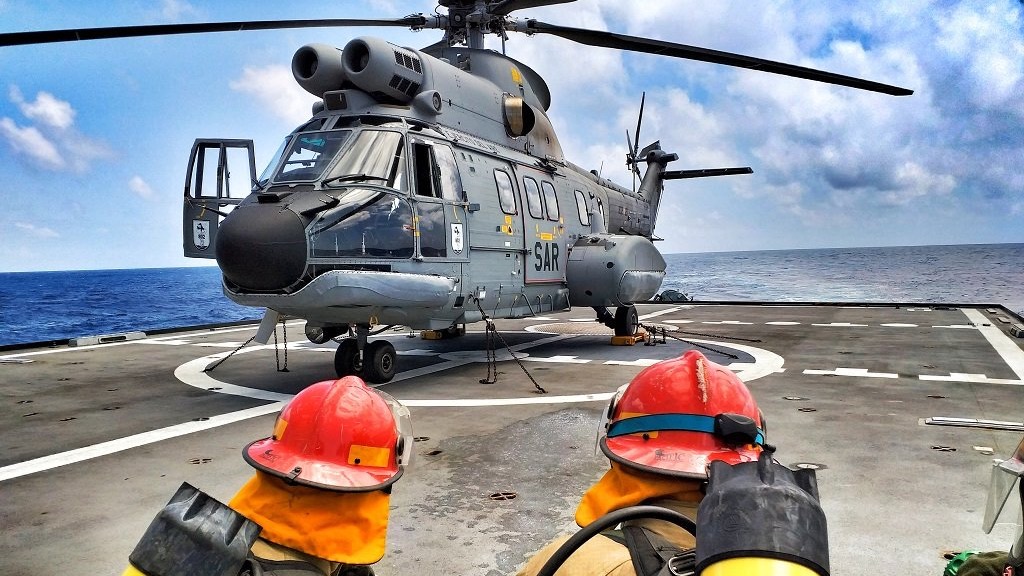
The Ministry of Defense (Air and Space Army) and the State Aviation Safety Agency (AESA) of the Ministry of Transport and Sustainable Mobility have signed an agreement for access to the registration database of civil aircraft that transit or are served from the Maspalomas Mission Control Center (Gran Canaria) of the COSPAS-SARSAT System.
The measure is to guarantee the Air Search and Rescue Service of the Air and Space Army telematic access to the Aircraft Registration Registry database and will allow the AESA to access the Aircraft Registration Registry Database Civilians of the south of Gran Canaria, which will be kept permanently updated, "notifying as soon as possible any changes that occur," states the text of the agreement, to which Maspalomas24H has had access.
Search and rescue operations are initiated whenever the Maspalomas RCC is aware that an aircraft could be in danger. Normally, the Air Traffic Control services will be the first to become aware of the possible emergency situation of an aircraft, and must, in such case, notify this situation to the Rescue Coordination Center, as specified in chapter 5 of book III. of the Air Traffic Regulations, with the declaration of the emergency phase that corresponds to the situation: Uncertainty (INCERFA), Alert (ALERFA) or Danger (DETRESFA).
The possible emergency situation of an aircraft could also be inferred from the reception in the RCC offices of the activation message of a 406 MHz emergency beacon issued by the Mission Control Center of Maspalomas (Gran Canaria) of the COSPAS-SARSAT System . While no two search and rescue operations follow exactly the same guidelines, the success of a SAR mission often depends on how quickly the operation is planned and carried out, for which it is essential that the RCC quickly receive all available information to be able to evaluate the situation, decide the course of action and timely activate the appropriate SAR means.
In this sense, the information included in the Aircraft Registration Registry database can be very useful for locating the owner or operator of an aircraft that is in danger, helping to clarify their situation.