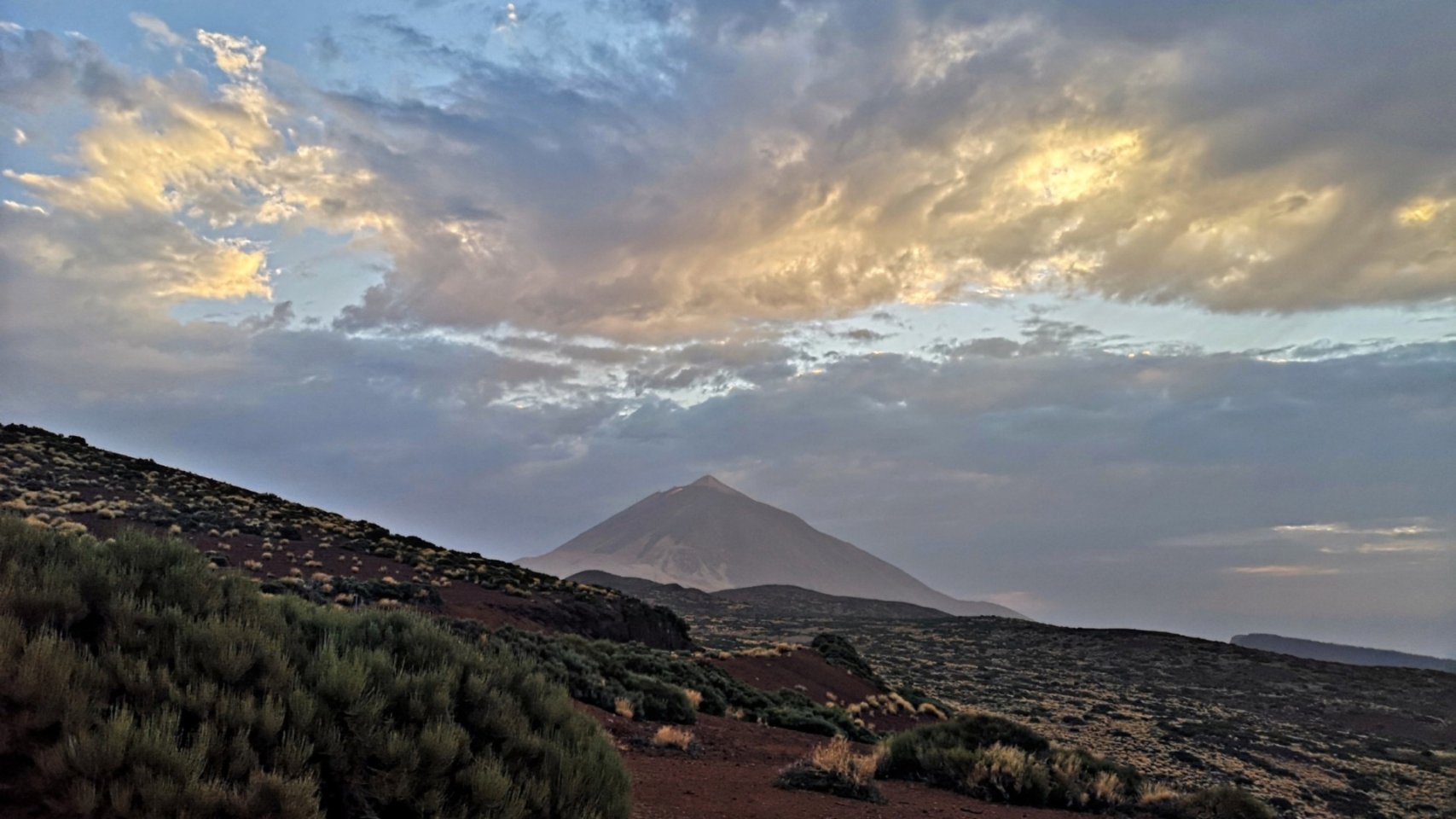
Recent warnings from experts raise concerns about the possibility of experiencing a new volcanic crisis in the archipelago
While in Tenerife the seismographs show activity in the vicinity of Teide, in the south of Gran Canaria (and the rest of the tourist areas of the archipelago) it is observed with the usual mixture of skepticism and morbidity whenever the volcanoes of the islands make an appearance in the headlines.
Luca D'Auria, director of the Volcanic Surveillance Department of INVOLCAN, has once again issued a warning: seismic activity and gas emissions in Tenerife have been increasing for years and, although the probability of an eruption in 2025 is only 2%, in the next five years the figure rises to 40%.
D'Auria, who has been advocating for years for the dissemination of volcanic information among the Canary Island population, already warned in 2016 that "Teide speaks to us, but we don't know what it is telling us" and in 2022 that the risk of eruption in the coming years was 40%.
The seismic swarms that have been attracting attention for some time now have been concentrated in the area of Las Cañadas del Teide and the Teno massif and it has been enough movement for experts to fine-tune their models and trigger speculation, especially with the eruption of La Palma (and its consequences) still so recent. Could Tenerife experience an episode like that of La Palma in 2021? For the moment, the answer has gone from "no" to "not yet".
The tourism sector, which can do little if the worst forecasts are confirmed and Mount Teide erupts in the medium/long term, cannot ignore the fact that a volcanic crisis in Tenerife would affect the image of the Canary Islands as a whole as a safe destination.
It already happened in 2021, the tragedy experienced in La Palma with the loss of entire neighborhoods, businesses and plantations was compounded by the hard blow to the archipelago's economic engine, which saw the image of the volcano attract many curious people and scientists, but also scare away traditional holiday and leisure tourism from traditional markets. A blow that, in addition, came in the midst of recovery after the pandemic.